
Contents
Overview
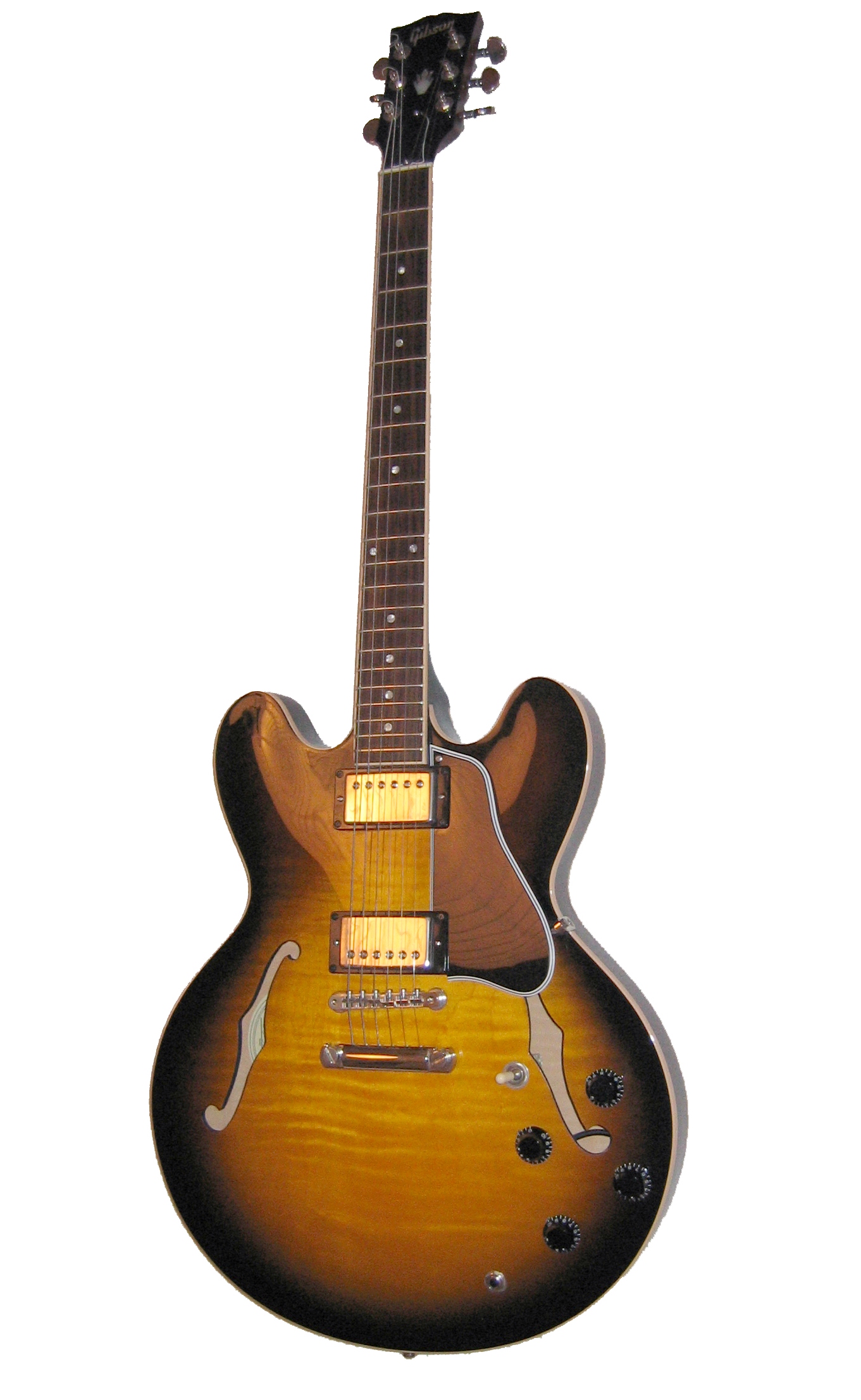
The Gibson ES series represents a pivotal lineage of semi-acoustic guitars, characterized by their hollow-body construction and electric amplification. Introduced by the Gibson Guitar Corporation, the 'ES' designation stands for 'Electric Spanish,' differentiating them from lap steel models. Many early models, like the legendary ES-150, were priced in dollars, with suffixes indicating features such as 'T' for thinline bodies or 'D' for double pickups. These instruments, often featuring distinctive f-holes, have been produced in full-body, single-cutaway, and double-cutaway variations, with cutaways styled as either Florentine (sharp) or Venetian (rounded). The ES series has spawned countless signature models, cementing its status as a cornerstone of modern music.
🎵 Origins & History
The genesis of the Gibson ES series can be traced back to the late 1930s, with the introduction of the ES-150 in 1936. This model, often cited as the first commercially successful electric guitar, was initially designed for jazz guitarists seeking greater volume to cut through ensembles. The 'ES' moniker, standing for 'Electric Spanish,' was a deliberate distinction from Gibson's EH line of lap steel guitars. Early ES models were often named after their price point in dollars, a practice that continued for some time. The adoption of these guitars by pioneering musicians like Charlie Christian in the late 1930s and early 1940s immediately elevated the ES series from a novel instrument to an essential tool for burgeoning genres like jazz and blues.
⚙️ How It Works
At their core, Gibson ES guitars are semi-acoustic instruments, meaning they combine elements of both solid-body and fully hollow-body electric guitars. They feature a carved maple or mahogany top, back, and sides, with a hollow interior that contributes to their warm, resonant tone. Crucially, a solid center block runs through the body, reducing feedback at higher volumes and allowing for the mounting of pickups and hardware, a design innovation that distinguishes them from purely hollow-body instruments. This construction allows the ES series to produce a rich, acoustic-like timbre when played clean, while also offering the sustain and feedback resistance necessary for amplified performance, making them versatile across numerous musical styles.
📊 Key Facts & Numbers
The Gibson ES series has seen an astonishing production run, with millions of units sold since its inception. The original ES-150 retailed for approximately $150 in 1936, a significant sum at the time. By the mid-1950s, models like the ES-335 became benchmarks, with production numbers reaching tens of thousands annually for popular variants. Today, new ES models can range from under $1,000 for entry-level offerings to upwards of $6,000 for high-end, custom-shop, or vintage reissues. The resale market for vintage ES guitars, particularly models from the late 1950s and early 1960s, frequently sees instruments fetch prices exceeding $10,000, with some rare examples surpassing $50,000 at auction.
👥 Key People & Organizations
The Gibson ES series owes its enduring legacy to a constellation of influential musicians and the dedicated craftspeople at Gibson Guitar Corporation. Charlie Christian is widely credited as the first major proponent of the electric Spanish guitar, his work on the ES-150 with Benny Goodman's orchestra setting a new standard. Later, artists like B.B. King made the Lucille model, a custom ES-355 variant, synonymous with his blues sound. Guitarists such as Larry Carlton, Eric Clapton (during his time with The Yardbirds), and John Mayer have all wielded various ES models, further cementing their iconic status. The engineers and designers at Gibson, including figures like Ted McCarty in the mid-20th century, were instrumental in developing the innovations that define the series.
🌍 Cultural Impact & Influence
The cultural footprint of the Gibson ES series is immense, fundamentally shaping the sonic palettes of jazz, blues, rock, and country music. The warm, woody tone of early ES models became the bedrock of jazz guitar, while the increased volume and sustain of later models like the ES-335 powered the blues-rock revolution. The distinctive look of an ES guitar—whether the elegant f-holes of an ES-175 or the sleek lines of a thinline model—is instantly recognizable and has been emulated countless times. Its presence in the hands of legendary performers has imbued the ES series with an almost mythical status, making it a aspirational instrument for guitarists worldwide and a symbol of musical heritage.
⚡ Current State & Latest Developments
As of 2024, Gibson continues to produce a wide array of ES models, catering to both vintage enthusiasts and modern players. The core lineup includes perennial favorites like the ES-335, ES-339, and ES-175, alongside numerous signature models and limited editions. Gibson's Custom Shop offers high-end recreations and bespoke variations, often featuring premium tonewoods and meticulous craftsmanship. Recent developments include advancements in pickup technology and hardware, as well as the introduction of more affordable Epiphone variants that bring the ES aesthetic to a wider audience, ensuring the series remains relevant and accessible in the contemporary guitar market.
🤔 Controversies & Debates
One persistent debate within the guitar community revolves around the distinction between true hollow-body guitars and Gibson's semi-hollow ES designs. Purists sometimes argue that the center block in models like the ES-335 compromises the authentic acoustic resonance of a fully hollow instrument, leading to discussions about tonal purity versus practical playability. Another point of contention can be the perceived inconsistency in quality control across different production eras and factories, a common concern with any long-running, high-volume instrument manufacturer. Furthermore, the pricing of new Gibson ES models, particularly those from the Custom Shop, often sparks debate regarding value for money compared to vintage instruments or competitors' offerings.
🔮 Future Outlook & Predictions
The future of the Gibson ES series appears robust, driven by continued demand from musicians across genres. We can anticipate further innovation in pickup designs, potentially integrating digital modeling or active electronics without compromising the classic aesthetic. Gibson may also explore new tonewood combinations or construction techniques to offer fresh sonic variations while staying true to the ES lineage. The enduring popularity of artists like John Mayer and Gary Clark Jr., who frequently employ ES guitars, suggests a sustained appeal to younger generations of guitarists. Expect continued emphasis on vintage reissues and artist signature models, further solidifying the ES series' place in guitar history.
💡 Practical Applications
The Gibson ES series finds practical application across a vast spectrum of musical contexts. In jazz, its warm, round tone is ideal for comping and soloing, exemplified by players like Jim Hall on his ES-175. Blues musicians utilize the ES series for its expressive tonal capabilities, from the stinging leads of Larry Carlton to the soulful bends of B.B. King. Rock guitarists often favor the semi-hollow construction for its ability to handle overdrive and distortion without excessive feedback, as demonstrated by Eric Clapton and Keith Richards. Country musicians also adopt ES models for their clear, articulate sound, particularly in rhythm playing and lead breaks.
Key Facts
- Category
- aesthetics
- Type
- topic