
Contents
Overview
The genesis of hydraulic fracturing traces back to the late 1940s. Stanolind Oil and Gas (now part of ExxonMobil) patented the technique. For decades, fracking was a niche technique, often employed in conjunction with acidizing to enhance oil and gas flow from conventional reservoirs. The true revolution began in the early 2000s with the development of horizontal drilling techniques, pioneered by companies like Pioneer Natural Resources and Chesapeake Energy, which allowed wells to access vast, previously uneconomical shale plays. This synergy between horizontal drilling and multi-stage hydraulic fracturing, particularly the use of slickwater fluids, dramatically increased the efficiency and scale of hydrocarbon extraction, ushering in the shale gas revolution in the United States.
⚙️ How It Works
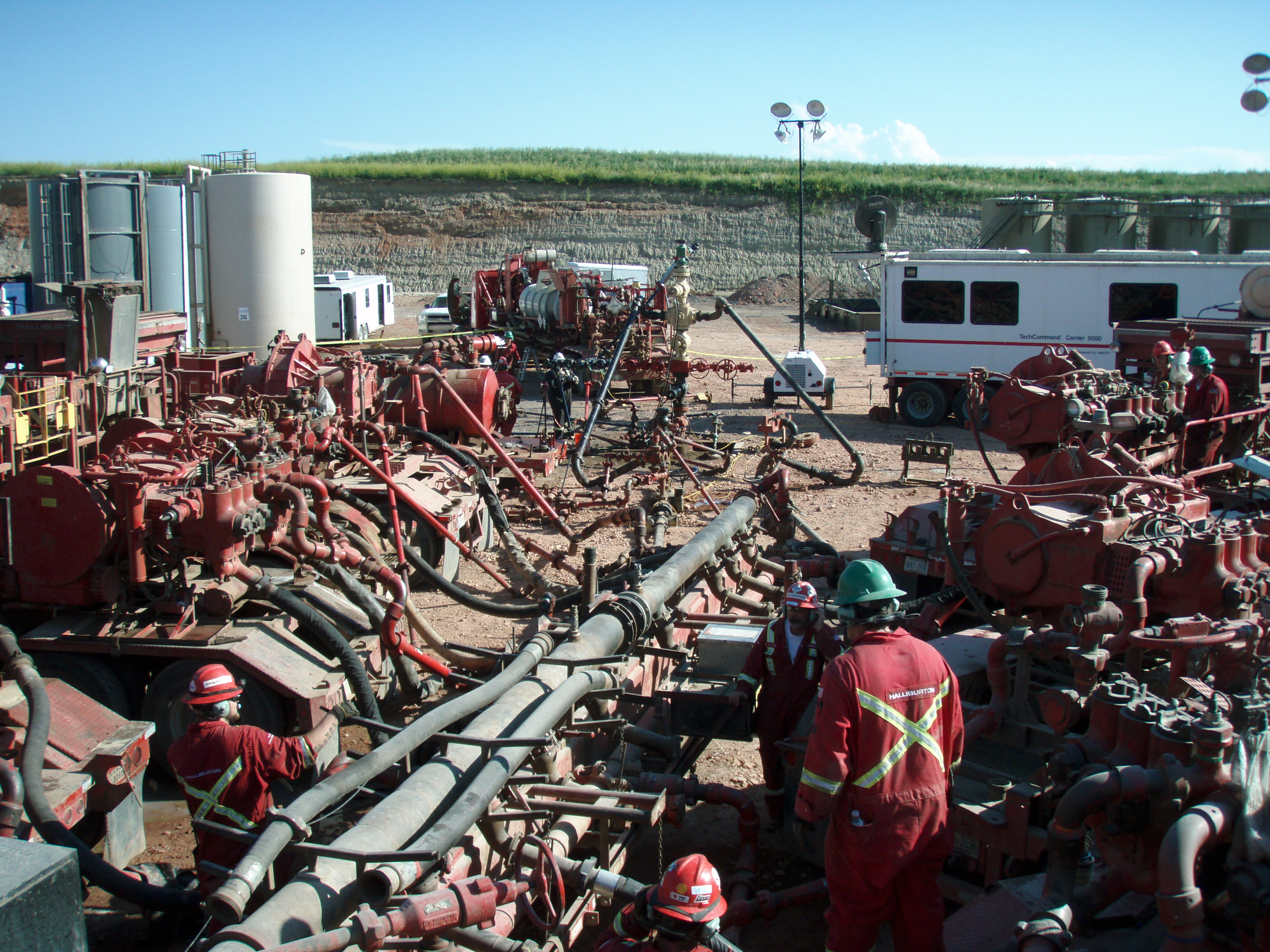
The hydraulic fracturing process begins with drilling a well, often thousands of feet deep, into a target rock formation like shale or tight sandstone. Once the well reaches the desired depth, it is typically turned horizontally to maximize contact with the hydrocarbon-bearing rock. Steel casing is cemented into place to isolate the wellbore from surrounding rock and groundwater. Perforations are then created in the casing at specific intervals along the horizontal section. High-pressure pumps inject a proprietary fracking fluid—typically over 90% water, with sand or ceramic beads (proppants) to hold fractures open, and a cocktail of chemical additives—into these perforations. The immense pressure (often exceeding 10,000 psi) exceeds the rock's tensile strength, creating a network of fractures. After the pressure is released, the proppants remain, propping open the fractures and allowing natural gas or oil to flow into the wellbore. The produced water, often laden with dissolved minerals and residual chemicals, is then managed, either through treatment and reuse or disposal, typically via deep underground injection wells.
📊 Key Facts & Numbers
Hydraulic fracturing is directly responsible for a significant portion of global energy production. In 2023, the United States produced approximately 12.9 trillion cubic feet of natural gas, with over 80% attributed to unconventional sources unlocked by fracking. The Marcellus Shale formation, spanning Pennsylvania, West Virginia, and New York, alone accounts for roughly 25% of U.S. natural gas production. Globally, countries like China and Argentina are also developing substantial shale resources, with China's Sichuan Basin estimated to hold over 1,000 trillion cubic feet of natural gas. The fracking industry has invested billions of dollars in specialized equipment, with a single fracking rig costing upwards of $20 million. The volume of water used per well can range from 2 million to 10 million gallons, and the number of fracturing stages per horizontal well can exceed 50.
👥 Key People & Organizations
Key figures in the development and popularization of hydraulic fracturing include George P. Mitchell, often hailed as the 'father of fracking' for his persistent efforts and innovations in the Barnett Shale play starting in the late 1990s, which proved the economic viability of shale gas extraction. Harold Hamm, CEO of Continental Resources, is another pivotal figure, instrumental in developing techniques for extracting oil from tight formations in the Bakken Formation. Organizations like the American Petroleum Institute (API) and IPAA have been vocal proponents, advocating for policies that support hydraulic fracturing. Conversely, environmental groups such as Food & Water Watch and Earthworks have been leading critics, raising alarms about the environmental impacts and lobbying for stricter regulations or outright bans.
🌍 Cultural Impact & Influence
Hydraulic fracturing has profoundly reshaped the global energy landscape and geopolitical dynamics. The U.S. shale boom, driven by fracking, transformed the nation from a net energy importer to a major exporter of oil and natural gas, significantly impacting global energy prices and reducing reliance on traditional oil-producing nations. This has had ripple effects on international relations, particularly concerning energy security in Europe. Culturally, fracking has become a potent symbol in environmental debates, appearing in documentaries, news coverage, and public discourse, often polarizing communities. The economic impact has been substantial, creating thousands of jobs and revitalizing rural economies in areas with significant shale deposits, though often accompanied by social strains and infrastructure challenges. The visual of well pads and the distinctive sound of fracking operations have become recognizable features in certain landscapes.
⚡ Current State & Latest Developments
As of 2024, hydraulic fracturing remains a dominant force in energy production, though facing increasing scrutiny and evolving regulatory landscapes. While the U.S. continues to lead in shale production, the industry is grappling with declining well productivity in some mature basins and the rising costs of drilling and completion. Companies like EOG Resources and Devon Energy are investing in efficiency improvements and exploring new plays. Globally, China's state-owned energy giants, such as Sinopec, are aggressively expanding their fracking operations, aiming to tap into their vast domestic reserves. Regulatory bodies in various jurisdictions are continuously updating rules regarding water management, chemical disclosure, seismic monitoring, and methane emission controls, reflecting ongoing public and scientific pressure. The development of advanced technologies, including super-critical CO2 fracturing and bio-based fracking fluids, is also underway, seeking more sustainable alternatives.
🤔 Controversies & Debates
The controversies surrounding hydraulic fracturing are multifaceted and deeply entrenched. A primary concern is the potential for groundwater contamination, either through the migration of fracking fluids or naturally occurring methane and brines escaping the wellbore or through surface spills. The chemicals used in fracking fluids, while often proprietary, include substances like benzene and ethylene glycol, which are known carcinogens and toxins. Another significant issue is induced seismicity; the injection of wastewater from fracking operations into deep disposal wells has been linked to an increase in earthquake frequency and intensity in regions like Oklahoma and Texas. Methane emissions, a potent greenhouse gas, from well sites and associated infrastructure are also a major point of contention, potentially undermining the climate benefits of natural gas as a 'bridge fuel.' Furthermore, the vast water requirements of fracking operations raise concerns about water scarcity in arid regions, and the disposal of produced water presents ongoing challenges.
🔮 Future Outlook & Predictions
The future of hydraulic fracturing is likely to be shaped by a complex interplay of technological innovation, regulatory pressures, and market demand for energy. Proponents envision a future where advancements in geological sequestration and improved methane capture technologies mitigate environmental risks, allowing fracking to continue providing affordable energy while the world transitions to renewables. Innovations in waterless fracking or closed-loop systems could significantly reduce water usage and disposal issues. Critics, however, foresee a gradual decline as the costs of extraction rise, regulatory hurdles intensify, and renewable energy sources like solar power and wind power become increasingly cost-competitive and politically favored. Some predict a plateau in U.S. production within the next decade, while others believe new discoveries and technological breakthroughs will extend the era of shale dominance. The role of natural gas as a tran
Key Facts
- Category
- technology
- Type
- topic