
Contents
- 🚀 What is IBM Leadership?
- 🎯 Who Needs to Understand IBM Leadership?
- 🕰️ A Brief History of IBM's Command Structure
- 💡 Key Leadership Philosophies & Their Evolution
- ⚖️ Contrasting IBM's Past and Present Leadership
- 📈 The Impact of [[Arvind Krishna|Arvind Krishna]]'s Tenure
- 🌐 IBM Leadership in the Age of Hybrid Cloud and AI
- ❓ Debates Surrounding IBM's Leadership Decisions
- 🧭 Navigating IBM's Leadership Landscape: Practical Tips
- 📞 How to Engage with IBM Leadership Insights
- Frequently Asked Questions
- Related Topics
Overview
IBM's leadership is a fascinating case study in corporate evolution, marked by pivotal figures who've steered the tech behemoth through seismic industry changes. From the early days of mainframe dominance under figures like Thomas J. Watson Sr. to the strategic pivots towards software and services, and more recently, the embrace of hybrid cloud and AI under leaders like Ginni Rometty and Arvind Krishna, the company's command structure reflects its ongoing battle for relevance. Understanding IBM's leadership means examining not just individual CEOs, but the broader cultural and strategic forces that shape their decisions, often balancing legacy strengths with the imperative to innovate. The current era, under Krishna, is defined by the massive $34 billion acquisition of Red Hat, a bold bet on open-source hybrid cloud that signals a clear direction for the company's future. This leadership narrative is a constant negotiation between maintaining a vast enterprise and fostering the agility required to thrive in a rapidly transforming technological landscape.
🚀 What is IBM Leadership?
IBM Leadership refers to the strategic direction, decision-making processes, and executive management that have guided International Business Machines Corporation throughout its history. It encompasses the individuals, philosophies, and organizational structures that have shaped IBM's trajectory from a tabulating machine company to a global technology and consulting powerhouse. Understanding IBM's leadership is crucial for grasping its corporate evolution, its market positioning, and its influence on the broader tech industry. This includes examining the leadership styles of its CEOs, the impact of its board of directors, and the underlying corporate culture that leadership cultivates.
🎯 Who Needs to Understand IBM Leadership?
Anyone with a stake in the technology sector, from IBM Employees and investors to competitors and policymakers, needs to understand IBM's leadership. For employees, it dictates career paths, company culture, and strategic priorities. For investors, it's a key indicator of future performance and stability. Competitors analyze IBM's leadership moves to anticipate market shifts and identify strategic opportunities. Furthermore, academics studying Corporate Governance and Organizational Behavior find IBM a rich case study in long-term corporate adaptation and transformation.
🕰️ A Brief History of IBM's Command Structure
IBM's leadership history is a saga of dramatic shifts. From the paternalistic, long-tenured leadership of Thomas J. Watson Sr. and his son, which built a culture of discipline and sales prowess, to the transformative, albeit painful, restructuring under Lou Gerstner in the 1990s, the company has seen distinct eras. Each period was defined by the prevailing technological paradigms and the specific challenges IBM faced, from mainframe dominance to the personal computer revolution and the subsequent internet boom. The legacy of these leaders continues to inform the company's DNA.
💡 Key Leadership Philosophies & Their Evolution
Over the decades, IBM's leadership philosophies have evolved significantly. Early IBM emphasized a strong, centralized command, fostering loyalty and a standardized approach to business. The Gerstner era introduced a more decentralized, market-driven philosophy, focusing on integration and customer value. Today, under Arvind Krishna, the emphasis is on Hybrid Cloud and Artificial Intelligence, driving a culture of innovation, agility, and a renewed focus on enterprise solutions. This shift reflects IBM's continuous effort to align its leadership with emerging technological frontiers.
⚖️ Contrasting IBM's Past and Present Leadership
The contrast between IBM's past and present leadership is stark. Historically, IBM was characterized by a top-down, hierarchical structure, with decisions flowing from a powerful executive suite. This often led to a slower response to market changes. Current leadership, while still maintaining strong strategic direction, encourages more agile methodologies, data-driven decision-making, and a greater emphasis on empowering teams. The shift from a hardware-centric empire to a software and services-focused enterprise under Krishna's guidance represents a fundamental change in leadership priorities and operational execution.
📈 The Impact of [[Arvind Krishna|Arvind Krishna]]'s Tenure
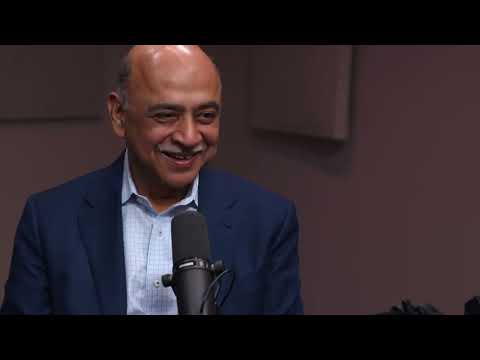
The tenure of Arvind Krishna, who took the helm as CEO in April 2020, marks a pivotal moment for IBM. His leadership is defined by the strategic acquisition of Red Hat for $34 billion, a move that significantly bolstered IBM's Hybrid Cloud capabilities and signaled a decisive pivot away from legacy businesses. Krishna's focus on Artificial Intelligence, Quantum Computing, and Consulting Services aims to reposition IBM as a leader in these high-growth areas, a stark departure from its historical hardware dominance.
🌐 IBM Leadership in the Age of Hybrid Cloud and AI
IBM's current leadership is intensely focused on navigating the complex landscape of Hybrid Cloud and Artificial Intelligence. This involves not only technological innovation but also a strategic realignment of its business units and workforce. The company is investing heavily in talent development, fostering an environment that supports experimentation and rapid iteration. Leadership challenges include integrating diverse technological platforms, addressing cybersecurity threats, and maintaining a competitive edge against agile cloud-native rivals like AWS and Microsoft Azure.
❓ Debates Surrounding IBM's Leadership Decisions
Significant debates surround IBM's leadership, particularly concerning its past divestitures and its current strategic direction. Critics question whether the company has divested too many promising businesses over the years, potentially hindering future growth. There's also ongoing discussion about the pace of its transformation under Krishna, with some arguing it's too slow to catch up to nimbler competitors, while others see a deliberate, well-executed strategy. The effectiveness of its Hybrid Cloud strategy and its ability to monetize Artificial Intelligence at scale remain subjects of intense scrutiny.
📞 How to Engage with IBM Leadership Insights
Engaging with IBM leadership insights can be achieved through various channels. Following official IBM news releases and executive blogs provides direct communication. Analyzing IBM's quarterly earnings reports and investor presentations offers a quantitative view of its strategic execution. For a deeper understanding of leadership philosophy and impact, consulting industry analyses from firms like Gartner and Forrester, as well as academic research on Corporate Strategy and Technology Leadership, is invaluable. Participating in IBM-hosted events or webinars can also offer direct exposure.
Key Facts
- Year
- 1911
- Origin
- Founded as the Computing-Tabulating-Recording Company (CTR) in 1911, later renamed International Business Machines (IBM) in 1924.
- Category
- Corporate Leadership
- Type
- Organization Leadership
Frequently Asked Questions
Who is the current CEO of IBM and what is their primary focus?
The current CEO of IBM is Arvind Krishna, who assumed the role in April 2020. His primary focus is on driving IBM's growth through Hybrid Cloud and Artificial Intelligence solutions, significantly bolstered by the acquisition of Red Hat. He aims to reposition IBM as a leader in these critical enterprise technology areas.
What was the significance of the Red Hat acquisition for IBM leadership?
The Red Hat acquisition, valued at $34 billion, was a landmark decision under Arvind Krishna leadership. It signaled a definitive strategic pivot towards Hybrid Cloud dominance and open-source technologies, positioning IBM to better compete in the modern enterprise IT landscape and integrate diverse cloud environments.
How has IBM's leadership style changed over time?
IBM's leadership has evolved from the centralized, paternalistic style of the Watson era to the transformative, market-focused approach of Lou Gerstner, and now to Arvind Krishna emphasis on agility, data-driven decisions, and innovation in Hybrid Cloud and Artificial Intelligence. The trend is towards greater decentralization and responsiveness.
What are the main challenges facing IBM's current leadership?
Key challenges include effectively integrating Red Hat and its open-source culture, competing with established cloud giants like Amazon Web Services and Microsoft Azure, accelerating innovation in Artificial Intelligence and Quantum Computing, and managing a significant workforce transition towards new skill sets.
Where can I find reliable information on IBM's leadership decisions?
Reliable sources include official IBM press releases, investor relations reports, executive blogs, and transcripts of earnings calls. Independent analysis from reputable tech industry research firms like Gartner and Forrester, as well as financial news outlets, also provide valuable perspectives.
How does IBM leadership approach innovation?
IBM leadership under Arvind Krishna prioritizes innovation in Hybrid Cloud and Artificial Intelligence. This involves significant R&D investment, strategic acquisitions like Red Hat, fostering an agile development culture, and focusing on enterprise-specific solutions that address complex business challenges.