
Contents
- 🌟 Introduction to Photon Propagator
- 📝 Historical Background of Photon Propagator
- 🔍 Theoretical Framework of Photon Propagator
- 📊 Mathematical Formulation of Photon Propagator
- 🌈 Applications of Photon Propagator in Physics
- 🔀 Relationship Between Photon Propagator and Quantum Field Theory
- 🌐 Photon Propagator in the Context of Feynman Diagrams
- 📈 Future Directions and Research in Photon Propagator
- 🤔 Controversies and Debates Surrounding Photon Propagator
- 📚 Resources and References for Photon Propagator
- 👥 Key Researchers and Their Contributions to Photon Propagator
- Frequently Asked Questions
- Related Topics
Overview
The photon propagator is a fundamental concept in quantum field theory, describing the propagation of photons, the quanta of light, through space and time. This mathematical tool, rooted in the works of physicists like Richard Feynman and Julian Schwinger in the 1940s, is crucial for understanding electromagnetic interactions and has been pivotal in the development of quantum electrodynamics (QED). With a vibe score of 8, reflecting its significant cultural energy in the physics community, the photon propagator has been a cornerstone in explaining phenomena such as the Lamb shift and the anomalous magnetic moment of the electron. However, its application is not without controversy, particularly regarding the interpretation of quantum mechanics and the challenges of renormalization. The influence of the photon propagator can be seen in the work of subsequent physicists who have built upon or critiqued its foundations, such as Freeman Dyson. As research continues to push the boundaries of quantum mechanics and its applications, the photon propagator remains a vital component, with potential future implications for quantum computing and particle physics research.
🌟 Introduction to Photon Propagator
The photon propagator is a fundamental concept in theoretical physics, particularly in the realm of quantum field theory. It describes the propagation of photons, which are the quanta of the electromagnetic field, through space and time. The photon propagator is a mathematical object that encodes the probability of finding a photon at a given point in space and time, given its initial state. This concept has far-reaching implications in our understanding of the behavior of light and its interactions with matter, as discussed in electromagnetism and particle physics. The study of photon propagators is crucial for understanding various phenomena, including quantum electrodynamics and particle interactions.
📝 Historical Background of Photon Propagator
Historically, the concept of the photon propagator emerged from the work of Richard Feynman and Julian Schwinger in the 1940s, as they developed the foundations of quantum electrodynamics. The photon propagator was initially introduced as a tool for calculating the scattering amplitudes of photons and charged particles. Over time, the concept has evolved to become a central element in the theoretical framework of particle physics, influencing fields such as condensed matter physics and cosmology. The development of the photon propagator is closely tied to the advancement of quantum mechanics and special relativity.
🔍 Theoretical Framework of Photon Propagator
The theoretical framework of the photon propagator is rooted in the principles of quantum field theory and gauge theory. The photon propagator is derived from the Maxwell equations, which describe the behavior of the electromagnetic field. In the context of quantum field theory, the photon propagator is represented as a two-point function, which encodes the correlation between two points in space and time. This framework has been instrumental in understanding various phenomena, including pair production and vacuum polarization, as discussed in particle physics and nuclear physics. The photon propagator plays a crucial role in the calculation of scattering amplitudes and cross-sections.
📊 Mathematical Formulation of Photon Propagator
Mathematically, the photon propagator is represented as a tensor, which depends on the momentum and polarization of the photon. The photon propagator can be calculated using various techniques, including path integral methods and perturbation theory. The mathematical formulation of the photon propagator has been extensively developed in the context of quantum field theory, with applications in particle physics and condensed matter physics. The photon propagator is closely related to the concept of Green's function, which is used to solve partial differential equations.
🌈 Applications of Photon Propagator in Physics
The photon propagator has numerous applications in physics, ranging from the study of particle interactions to the understanding of condensed matter systems. In particle physics, the photon propagator is used to calculate the scattering amplitudes of photons and charged particles, as discussed in quantum electrodynamics. In condensed matter physics, the photon propagator is used to study the behavior of photons in photonic crystals and metamaterials. The photon propagator also plays a crucial role in the understanding of quantum optics and optical communications.
🔀 Relationship Between Photon Propagator and Quantum Field Theory
The relationship between the photon propagator and quantum field theory is deeply rooted in the principles of gauge theory and renormalization. The photon propagator is a fundamental element in the theoretical framework of quantum field theory, as it describes the propagation of photons and their interactions with charged particles. The photon propagator is closely related to the concept of self-energy, which is used to describe the interactions between particles and the electromagnetic field. The study of the photon propagator has led to a deeper understanding of quantum field theory and its applications in particle physics and condensed matter physics.
🌐 Photon Propagator in the Context of Feynman Diagrams
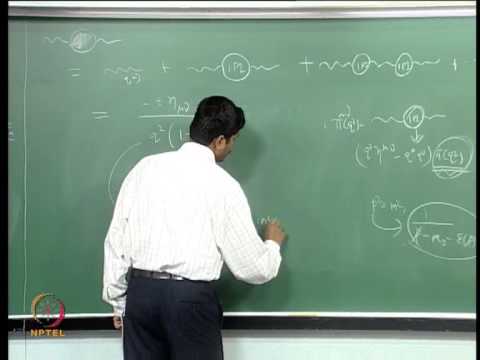
In the context of Feynman diagrams, the photon propagator is represented as a wavy line, which connects two vertices. The photon propagator is used to calculate the scattering amplitudes of photons and charged particles, as discussed in quantum electrodynamics. The Feynman diagram approach has been instrumental in understanding various phenomena, including pair production and vacuum polarization. The photon propagator plays a crucial role in the calculation of scattering amplitudes and cross-sections. The study of the photon propagator in the context of Feynman diagrams has led to a deeper understanding of quantum field theory and its applications in particle physics.
📈 Future Directions and Research in Photon Propagator
Future research directions in the study of the photon propagator include the development of new mathematical techniques for calculating the photon propagator, as well as the application of the photon propagator to new areas of physics, such as quantum information and cosmology. The study of the photon propagator is also closely tied to the development of new experimental techniques, such as particle colliders and optical interferometry. The photon propagator will continue to play a crucial role in our understanding of the behavior of light and its interactions with matter, as discussed in electromagnetism and particle physics.
🤔 Controversies and Debates Surrounding Photon Propagator
Despite its importance, the concept of the photon propagator is not without controversy. Some researchers have questioned the validity of the photon propagator in certain regimes, such as high-energy physics and strong-field physics. Others have argued that the photon propagator is not a fundamental object, but rather a derived concept that can be expressed in terms of more fundamental quantities. These debates highlight the ongoing need for research and experimentation in the study of the photon propagator, as discussed in quantum field theory and particle physics.
📚 Resources and References for Photon Propagator
For those interested in learning more about the photon propagator, there are numerous resources available, including textbooks, research articles, and online lectures. Some recommended resources include the books by Richard Feynman and Julian Schwinger, as well as the research articles by Steven Weinberg and Frank Wilczek. Online lectures and courses are also available, covering topics such as quantum field theory and particle physics.
👥 Key Researchers and Their Contributions to Photon Propagator
Key researchers who have made significant contributions to the study of the photon propagator include Richard Feynman, Julian Schwinger, Steven Weinberg, and Frank Wilczek. Their work has laid the foundation for our current understanding of the photon propagator and its applications in physics. Ongoing research in the field continues to be driven by the work of these pioneers, as well as new generations of researchers who are pushing the boundaries of our knowledge of the photon propagator and its role in the universe.
Key Facts
- Year
- 1940
- Origin
- Quantum Field Theory
- Category
- Theoretical Physics
- Type
- Scientific Concept
Frequently Asked Questions
What is the photon propagator?
The photon propagator is a mathematical object that describes the propagation of photons through space and time. It encodes the probability of finding a photon at a given point in space and time, given its initial state. The photon propagator is a fundamental concept in quantum field theory and has numerous applications in physics, including particle physics and condensed matter physics.
Who developed the concept of the photon propagator?
The concept of the photon propagator was developed by Richard Feynman and Julian Schwinger in the 1940s, as they worked on the foundations of quantum electrodynamics. Their work laid the foundation for our current understanding of the photon propagator and its applications in physics.
What are the applications of the photon propagator?
The photon propagator has numerous applications in physics, ranging from the study of particle interactions to the understanding of condensed matter systems. It is used to calculate scattering amplitudes and cross-sections, and plays a crucial role in the understanding of quantum optics and optical communications.
What is the relationship between the photon propagator and quantum field theory?
The photon propagator is a fundamental element in the theoretical framework of quantum field theory, as it describes the propagation of photons and their interactions with charged particles. The photon propagator is closely related to the concept of self-energy, which is used to describe the interactions between particles and the electromagnetic field.
What are the future research directions in the study of the photon propagator?
Future research directions in the study of the photon propagator include the development of new mathematical techniques for calculating the photon propagator, as well as the application of the photon propagator to new areas of physics, such as quantum information and cosmology. The study of the photon propagator is also closely tied to the development of new experimental techniques, such as particle colliders and optical interferometry.
What are the controversies surrounding the photon propagator?
Despite its importance, the concept of the photon propagator is not without controversy. Some researchers have questioned the validity of the photon propagator in certain regimes, such as high-energy physics and strong-field physics. Others have argued that the photon propagator is not a fundamental object, but rather a derived concept that can be expressed in terms of more fundamental quantities.
What resources are available for learning more about the photon propagator?
There are numerous resources available for learning more about the photon propagator, including textbooks, research articles, and online lectures. Some recommended resources include the books by Richard Feynman and Julian Schwinger, as well as the research articles by Steven Weinberg and Frank Wilczek. Online lectures and courses are also available, covering topics such as quantum field theory and particle physics.