
Contents
Overview
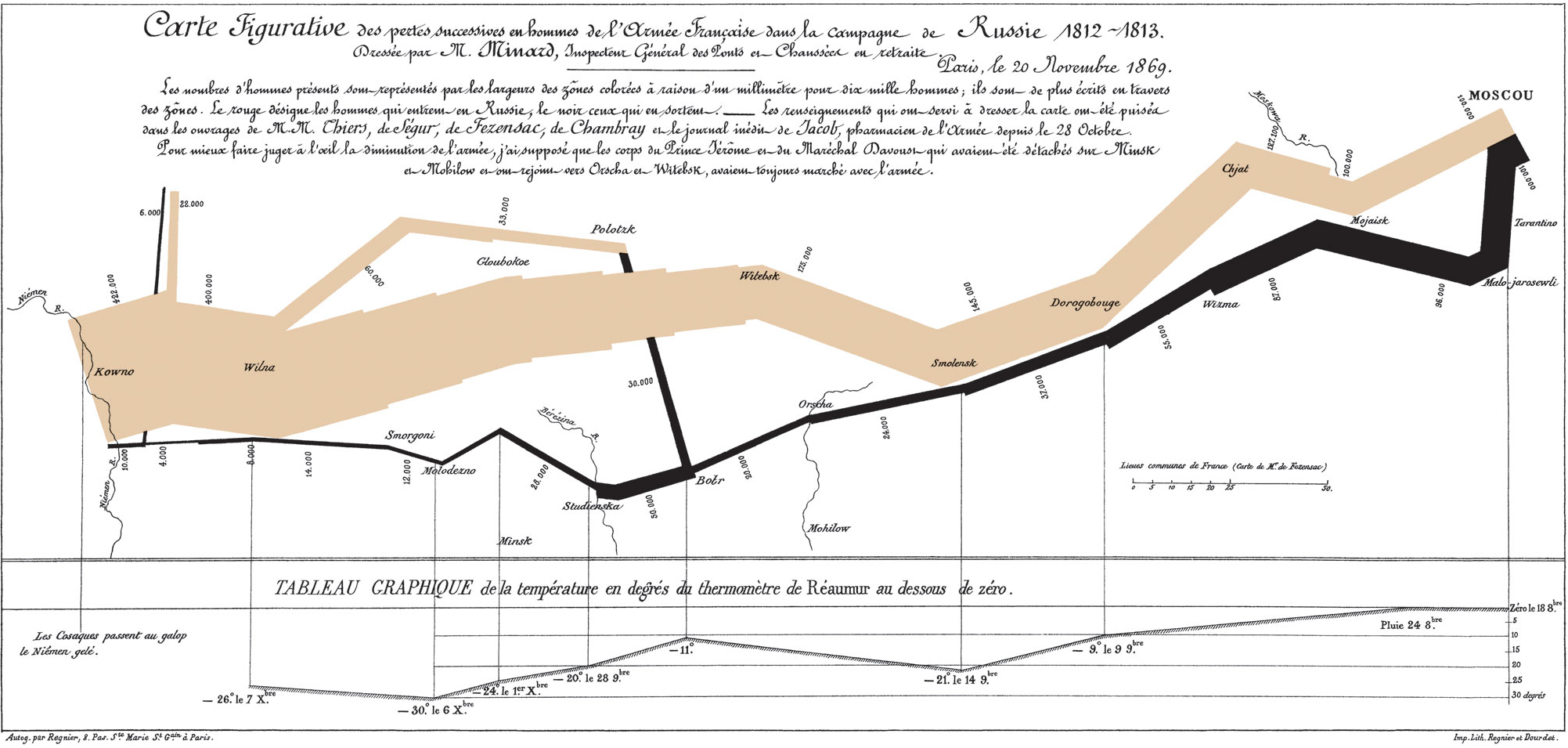
The genesis of thematic maps can be traced to the Enlightenment and the subsequent explosion of data collection in the 18th and 19th centuries. Early pioneers like Edmond Halley created rudimentary thematic maps, such as his 1686 chart of trade winds, and William Smith's geological maps laid groundwork for visualizing subsurface features. Figures like Charles-Joseph Minard produced iconic maps, such as his 1869 visualization of Napoleon's Russian campaign, which masterfully combined geographic data with temporal and quantitative information. The development of choropleth maps during the 1854 Broad Street cholera outbreak, mapping cases to pinpoint the contaminated water pump, stands as a landmark achievement, demonstrating the power of thematic mapping in public health and urban planning. These early efforts established the fundamental principle: using maps not just to show where things are, but to reveal patterns and relationships.
⚙️ How It Works
The core mechanism of a thematic map lies in its symbolic representation of data. Instead of depicting all geographical features, it focuses on a single theme, using visual variables to encode information. For instance, choropleth maps use varying shades or patterns within predefined administrative boundaries (like counties or states) to represent statistical values, such as population density or election results. Dot density maps employ a single dot to represent a specific quantity, scattering them across an area to show distribution, with the density of dots indicating the concentration of the phenomenon. Proportional symbol maps use symbols (circles, squares) whose size is directly proportional to the data value at specific locations, effectively visualizing magnitudes. Isoline maps, like isotherms or isobars, connect points of equal value, illustrating gradients and continuous surfaces such as temperature or atmospheric pressure. The choice of symbolization is critical, directly impacting the map's legibility and the user's ability to accurately interpret the underlying data.
📊 Key Facts & Numbers
Thematic maps are quantifiable by nature. For example, a choropleth map of the United States might reveal patterns in population distribution. A dot density map of urban populations could illustrate the concentration of people in cities. Global internet penetration is a statistic that can be vividly illustrated on a world thematic map. Isoline maps are crucial in meteorology; for instance, isotherms connect points of equal temperature and isobars connect points of equal atmospheric pressure. The accuracy of thematic maps is often measured by geospatial data precision. The global market for GIS software and services, which heavily relies on thematic mapping, was valued at over $10 billion in 2023 and is projected to grow by 12-15% annually.
👥 Key People & Organizations
Key figures in thematic cartography include Charles-Joseph Minard, whose 1869 map of Napoleon's Russian campaign is a masterclass in data visualization. John Snow's 1854 cholera map is a foundational example in public health mapping. In the 20th century, Jacques Bertin's "Semiology of Graphics" provided a theoretical framework for visual variables in cartography. Organizations like the American Geographical Society and the Royal Geographical Society have historically championed cartographic innovation. Modern GIS software providers such as Esri (founded by Jack Dangermond) and Autodesk are central to the creation and dissemination of thematic maps, enabling millions of users worldwide. Academic institutions, including Harvard University's Department of Earth and Planetary Sciences and University of Wisconsin-Madison's Cartography Laboratory, continue to push the boundaries of thematic mapping research and education.
🌍 Cultural Impact & Influence
The influence of thematic maps extends far beyond academic circles, permeating public discourse and decision-making. John Snow's cholera map demonstrated the power of visual evidence in policy. Thematic maps were critical for military strategy during World War I and World War II, illustrating troop movements, supply lines, and enemy positions. In contemporary politics, election maps, often rendered as choropleth maps, shape public perception of electoral outcomes and political divides. Environmental organizations utilize thematic maps to highlight issues like deforestation, climate change impacts, and biodiversity loss, influencing public awareness and advocacy. The ubiquity of online mapping services like Google Maps and OpenStreetMap has made thematic data visualization accessible to a global audience, fostering a greater understanding of complex spatial patterns in everyday life.
⚡ Current State & Latest Developments
Thematic mapping in 2024 is deeply integrated with big data analytics and AI. Web-based GIS platforms have democratized thematic map creation, allowing users with limited technical expertise to generate sophisticated visualizations. Advancements in remote sensing technology, from satellites to drones, provide increasingly granular and frequent data for thematic analysis, covering everything from crop health to urban sprawl. Furthermore, interactive thematic maps, where users can filter data, zoom into specific areas, and explore layers of information, are becoming standard, enhancing user engagement and analytical depth. The integration of augmented reality is also emerging, promising to overlay thematic data onto the real world through mobile devices.
🤔 Controversies & Debates
One persistent debate revolves around the potential for thematic maps to mislead. The choice of classification scheme in choropleth maps (e.g., equal interval, quantile, natural breaks) can dramatically alter the visual representation of data, potentially exaggerating or downplaying spatial patterns. Gerrymandering, the manipulation of electoral district boundaries, is a prime example of how thematic map design can be used for political advantage. Critics also point to the ecological fallacy, where conclusions drawn from aggregated data at a larger scale (e.g., county level) may not accurately reflect conditions at a smaller, individual level. The ethical implications of data privacy are also paramount, especially when thematic maps visualize sensitive information like disease outbreaks or socioeconomic disparities. Ensuring transparency in data sources, methodologies, and symbolization choices remains a critical challenge for cartographers and data scientists.
🔮 Future Outlook & Predictions
The future of thematic mapping points towards hyper-personalization and deeper integration with emerging technologies. Expect to see more dynamic, AI-driven thematic maps that adapt in real-time to user queries and evolving data streams. Virtual reality environments may offer immersive experiences where users can navigate and interact with complex 3D thematic models of cities, ecosystems, or historical events. The fusion of thematic mapping with the Internet of Things (IoT)
💡 Practical Applications
Thematic maps have numerous practical applications across various fields. In urban planning, they help visualize population density, land use, and infrastructure needs. Public health officials use them to track disease outbreaks and allocate resources effectively. Environmental scientists employ thematic maps to monitor deforestation, pollution levels, and the impact of climate change. Businesses utilize them for market analysis, site selection, and logistics optimization. Emergency responders rely on them for disaster management, visualizing affected areas and planning evacuation routes. John Snow's cholera map is a classic example of their use in public health, while thematic maps were critical for military strategy during World War I and World War II.
Key Facts
- Category
- aesthetics
- Type
- topic