
Contents
- 🌍 Who Rules the Oil Barrel?
- 🇺🇸 United States: The Unconventional Powerhouse
- 🇸🇦 Saudi Arabia: The Traditional Kingpin
- 🇷🇺 Russia: The Geopolitical Juggernaut
- 🇨🇦 Canada: The Northern Giant
- 🇨🇳 China: The Insatiable Consumer and Growing Producer
- 🇮🇷 Iran: The Sanctioned Power
- 🇦🇪 United Arab Emirates: The Strategic Player
- 🇧🇷 Brazil: The Deepwater Pioneer
- 🇮🇶 Iraq: The Resurgent Force
- 📈 Market Movers & Shakers
- 💡 Navigating the Oil Landscape
- Frequently Asked Questions
- Related Topics
Overview
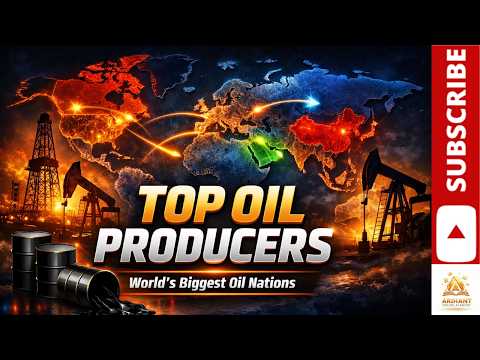
This guide is your essential briefing on the nations that dictate the global flow of crude oil. We're not just talking about reserves; we're dissecting production capacity, geopolitical influence, and the economic engines powered by black gold. Whether you're a geopolitics enthusiast, an energy markets trader, or simply curious about the forces shaping our world, understanding these oil titans is paramount. Their decisions ripple through economies, influence international relations, and directly impact the price you pay at the pump. This isn't just about geology; it's about power, strategy, and the constant dance of supply and demand on a global stage.
🇺🇸 United States: The Unconventional Powerhouse
The United States has surged to the top, largely thanks to the shale revolution. Technologies like hydraulic fracturing and horizontal drilling unlocked vast reserves previously deemed inaccessible. States like Texas, North Dakota, and New Mexico are now epicenters of production. While the US is a major producer, it's also the world's largest consumer, making its domestic market a critical bellwether for global prices. The interplay between domestic production, refining capacity, and export strategies makes the US a complex, yet dominant, force in the oil industry. The future here hinges on technological innovation and environmental policy debates.
🇸🇦 Saudi Arabia: The Traditional Kingpin
Saudi Arabia, the de facto leader of OPEC, has long been synonymous with oil. Its immense, easily accessible reserves, primarily in the Ghawar field, have allowed it to wield significant influence for decades. The state-owned Saudi Aramco is one of the world's largest companies by revenue. Saudi policy often aims to stabilize global markets, though its production decisions are deeply intertwined with regional politics and its own ambitious economic diversification plans, like Vision 2030. Their ability to rapidly adjust output remains a key tool in their geopolitical arsenal.
🇷🇺 Russia: The Geopolitical Juggernaut
Russia is a perennial top producer, leveraging its vast Siberian reserves. Its oil and gas sector is a cornerstone of the national economy and a critical element of its foreign policy. The Kremlin's control over major energy companies like Rosneft and Gazprom Neft allows for strategic deployment of energy resources. Russia's production levels and export routes are constantly scrutinized, especially in light of geopolitical tensions and international sanctions, making it a persistent factor in global energy security discussions.
🇨🇦 Canada: The Northern Giant
Canada ranks among the top producers, primarily due to its massive oil sands reserves in Alberta. Extracting bitumen from these sands is more complex and energy-intensive than conventional drilling, but technological advancements have made it increasingly viable. Canada's production is largely exported, primarily to the United States. The development of its oil sands is a subject of ongoing debate, balancing economic benefits against environmental concerns and Indigenous rights, presenting a unique challenge for its energy future.
🇨🇳 China: The Insatiable Consumer and Growing Producer
China, while a significant producer itself, is perhaps more defined by its insatiable demand. As the world's second-largest economy, its energy needs are colossal, making it the largest importer of crude oil. China's domestic production, though substantial, cannot keep pace with its industrial and transportation sectors. Beijing is actively investing in domestic exploration and production, as well as securing long-term supply deals globally, highlighting its strategic imperative to ensure energy security for its vast population and economy.
🇮🇷 Iran: The Sanctioned Power
Iran, despite facing stringent international sanctions, remains a significant oil producer with substantial reserves. Its production capacity has been historically hampered by geopolitical pressures and investment limitations. However, Iran's strategic location in the Persian Gulf and its ability to influence regional energy flows mean it cannot be ignored. The lifting or continuation of sanctions has a direct and immediate impact on global supply and price dynamics, making Iran a volatile but crucial player in the energy equation.
🇦🇪 United Arab Emirates: The Strategic Player
The United Arab Emirates, particularly Dubai and Abu Dhabi, has strategically positioned itself as a major oil producer and a global energy hub. The state-owned Abu Dhabi National Oil Company (ADNOC) manages vast reserves and has invested heavily in infrastructure and refining. The UAE plays a key role within OPEC, often advocating for market stability and strategic production adjustments. Its forward-looking approach includes significant investments in renewable energy, aiming to diversify its economy beyond fossil fuels.
🇧🇷 Brazil: The Deepwater Pioneer
Brazil has emerged as a major force in global oil production, largely driven by discoveries in its pre-salt offshore fields. These deepwater reserves, located off the coast of Brazil, are among the largest and most technically challenging to exploit. Companies like Petrobras are at the forefront of this deepwater exploration. Brazil's production growth has significant implications for global supply, particularly for markets in the Americas, and showcases the potential of advanced offshore extraction techniques.
🇮🇶 Iraq: The Resurgent Force
Iraq, a nation with some of the world's largest proven oil reserves, has been steadily rebuilding its production capacity after decades of conflict and instability. Despite challenges, Iraqi oil output has seen significant recovery, making it a crucial factor in OPEC+ decisions and global supply. The nation's ability to attract foreign investment and maintain security is key to realizing its full production potential, positioning it as a resurgent force with the capacity to influence market balances.
📈 Market Movers & Shakers
The global oil market is a complex ecosystem driven by the production decisions of these giants, alongside the actions of OPEC+, international energy agencies like the International Energy Agency (IEA), and the ever-present forces of global demand. Key factors influencing prices include geopolitical stability in producing regions, technological advancements in extraction, the pace of the global energy transition, and the strategic stockpiling or release of reserves. Understanding the interplay between these entities and forces is crucial for anyone seeking to comprehend energy economics.
Key Facts
- Year
- 2023
- Origin
- Vibepedia.wiki
- Category
- Geopolitics & Energy
- Type
- Resource Guide
Frequently Asked Questions
Which country produces the most oil?
As of recent data, the United States is consistently the world's largest producer of crude oil, largely due to its shale oil output. This has been a significant shift in the global energy landscape over the past decade, surpassing traditional heavyweights like Saudi Arabia and Russia in sheer volume.
What is OPEC and why is it important?
The Organization of the Petroleum Exporting Countries (OPEC) is an intergovernmental organization of oil-exporting countries founded in 1960. Its primary goal is to coordinate and unify the petroleum policies of its member countries, ensuring the stabilization of oil markets. OPEC, often acting in coordination with non-OPEC allies in a group known as OPEC+, has significant influence over global oil prices through its production quotas.
How do sanctions affect oil production?
International sanctions, particularly those imposed on countries like Iran and Venezuela, can severely restrict their ability to export oil and attract foreign investment. This often leads to a decrease in their production levels, impacting global supply and potentially driving up prices for consumers. The effectiveness and duration of these sanctions are critical factors in global energy market dynamics.
What is the difference between oil reserves and oil production?
Oil reserves refer to the amount of crude oil that can be economically and technically extracted from known fields. Production, on the other hand, is the actual rate at which oil is extracted and brought to market. A country might have vast reserves but a lower production rate due to infrastructure limitations, political factors, or strategic decisions to conserve resources.
How is the shale oil revolution changing the market?
The shale oil revolution, primarily in the United States, has dramatically increased global oil supply and altered traditional market dynamics. It has made the US a major exporter, reduced its reliance on imports, and introduced greater price volatility. This technological advancement has challenged the dominance of conventional oil producers and reshaped geopolitical energy alliances.
What role do non-OPEC countries play?
Non-OPEC countries, such as the United States, Canada, and Brazil, are increasingly influential in global oil markets. Their production levels, especially from unconventional sources like shale and deepwater, can significantly impact supply and price, often acting as a counterweight to OPEC's influence. The coordination between OPEC and these non-OPEC producers, known as OPEC+, is crucial for market management.