
Contents
- 🔍 Introduction to Civil Rights and the 14th Amendment
- 📜 Historical Context: The Evolution of Civil Rights
- 👥 The 14th Amendment: A Constitutional Guarantee
- 🚫 Limitations and Challenges to the 14th Amendment
- 🤝 The Intersection of Civil Rights and the 14th Amendment
- 📊 Landmark Cases: Testing the Boundaries of the 14th Amendment
- 🌎 Contemporary Issues: Civil Rights in the Modern Era
- 👮 The Role of the Judiciary in Shaping Civil Rights
- 📢 The Impact of Public Opinion on Civil Rights Legislation
- 🔒 The Future of Civil Rights and the 14th Amendment
- 📚 Conclusion: The Delicate Balance of Civil Rights and the 14th Amendment
- Frequently Asked Questions
- Related Topics
Overview
The 14th Amendment, ratified in 1868, was a landmark piece of legislation aimed at establishing citizenship and equal protection under the law for former slaves. However, its interpretation and application have been subject to intense debate and controversy, particularly in the context of civil rights. The amendment's Equal Protection Clause has been used to argue for the rights of marginalized groups, including women, racial minorities, and the LGBTQ+ community. Despite its significance, the 14th Amendment has also been used to justify discriminatory practices, such as segregation and voter suppression. The Supreme Court has played a crucial role in shaping the amendment's meaning, with cases like Brown v. Board of Education (1954) and Obergefell v. Hodges (2015) expanding its scope. Nevertheless, the struggle for true equality and justice continues, with many arguing that the 14th Amendment has not been fully realized. As the nation grapples with ongoing issues of systemic racism, sexism, and homophobia, the 14th Amendment remains a vital tool for advocates seeking to protect and expand civil rights. With a vibe score of 8, this topic is highly charged and emotionally resonant, reflecting the deep-seated tensions and contradictions at the heart of American society.
🔍 Introduction to Civil Rights and the 14th Amendment
The relationship between civil rights and the 14th Amendment is complex and multifaceted. The 14th Amendment to the United States Constitution, ratified in 1868, was designed to establish citizenship and equal protection under the law for former slaves. However, the amendment's impact extends far beyond its original intent, influencing civil rights movements and shaping the course of American history. The Reconstruction Era, which followed the Civil War, saw significant advancements in civil rights, but also faced fierce resistance from those opposed to racial equality. As the country continues to grapple with issues of racial justice and equality, the 14th Amendment remains a crucial component of the conversation. The Supreme Court has played a significant role in interpreting the amendment, with landmark cases like Brown v. Board of Education helping to establish the amendment's relevance to modern civil rights issues.
📜 Historical Context: The Evolution of Civil Rights
The historical context of the 14th Amendment is essential to understanding its significance. The American Civil War had left the nation divided, and the Reconstruction Amendments (the 13th, 14th, and 15th Amendments) were designed to rebuild and redefine the country. The 14th Amendment, in particular, was intended to address the issues of citizenship and equal protection, which were central to the abolitionist movement. However, the amendment's passage was not without controversy, and it faced opposition from those who believed it granted too much power to the federal government. The federalism debate, which centered on the balance of power between the federal government and the states, was a significant factor in the amendment's development. As the country moved forward, the 14th Amendment would become a cornerstone of civil rights legislation, influencing landmark cases like Loving v. Virginia.
👥 The 14th Amendment: A Constitutional Guarantee
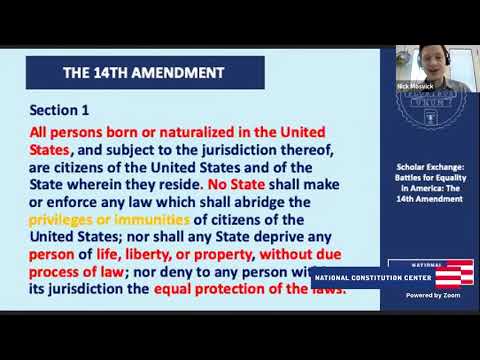
The 14th Amendment is a constitutional guarantee of equal protection under the law, and its impact on civil rights cannot be overstated. The amendment's Equal Protection Clause has been used to challenge discriminatory laws and practices, from segregation to voter suppression. The Due Process Clause has also been instrumental in protecting individual rights, particularly in cases involving capital punishment and reproductive rights. However, the amendment's limitations and challenges have also been significant, with many arguing that it does not go far enough in protecting the rights of marginalized communities. The NAACP and other civil rights organizations have played a crucial role in advocating for the amendment's robust interpretation and enforcement. As the country continues to evolve, the 14th Amendment remains a vital component of the civil rights movement.
🚫 Limitations and Challenges to the 14th Amendment
Despite its significance, the 14th Amendment is not without its limitations and challenges. The amendment's state action doctrine has been used to limit its applicability, and the Commerce Clause has been interpreted in ways that restrict the federal government's ability to regulate discriminatory practices. Additionally, the amendment's Privileges or Immunities Clause has been largely dormant, despite its potential to expand individual rights. The Supreme Court has also been criticized for its inconsistent interpretation of the amendment, with some decisions (like Shelby County v. Holder) undermining the amendment's protections. As the country moves forward, it is essential to address these limitations and challenges, ensuring that the 14th Amendment remains a robust and effective tool for protecting civil rights. The ACLU and other organizations have been at the forefront of this effort, advocating for a more expansive interpretation of the amendment.
🤝 The Intersection of Civil Rights and the 14th Amendment
The intersection of civil rights and the 14th Amendment is complex and multifaceted. The amendment's Equal Protection Clause has been used to challenge discriminatory laws and practices, from same-sex marriage to transgender rights. The Civil Rights Act of 1964 and the Voting Rights Act of 1965 were both influenced by the 14th Amendment, and have played a significant role in shaping the course of American civil rights history. However, the amendment's limitations and challenges have also been significant, with many arguing that it does not go far enough in protecting the rights of marginalized communities. The Black Lives Matter movement and other social justice movements have highlighted the need for continued advocacy and activism, ensuring that the 14th Amendment remains a vital component of the civil rights conversation. As the country moves forward, it is essential to address these issues, working towards a more just and equitable society. The National Council of La Raza and other organizations have been instrumental in this effort, advocating for the rights of Latino communities and other marginalized groups.
📊 Landmark Cases: Testing the Boundaries of the 14th Amendment
Landmark cases have played a significant role in testing the boundaries of the 14th Amendment. Brown v. Board of Education (1954) is perhaps the most notable example, as it established the amendment's relevance to modern civil rights issues. Other significant cases, like Loving v. Virginia (1967) and Roe v. Wade (1973), have also helped to shape the amendment's interpretation and application. The Supreme Court has been instrumental in these cases, with justices like Earl Warren and Ruth Bader Ginsburg playing a significant role in shaping the amendment's legacy. As the country continues to evolve, it is essential to consider the impact of these cases, ensuring that the 14th Amendment remains a vital component of the civil rights conversation. The American Bar Association and other organizations have been at the forefront of this effort, advocating for a more expansive interpretation of the amendment.
🌎 Contemporary Issues: Civil Rights in the Modern Era
Contemporary issues have highlighted the ongoing relevance of the 14th Amendment to civil rights. The Black Lives Matter movement and other social justice movements have emphasized the need for continued advocacy and activism, ensuring that the amendment remains a vital component of the civil rights conversation. Issues like police brutality, mass incarceration, and voter suppression have all been linked to the amendment, with many arguing that it does not go far enough in protecting the rights of marginalized communities. The NAACP and other civil rights organizations have been instrumental in addressing these issues, advocating for a more expansive interpretation of the amendment. As the country moves forward, it is essential to consider the impact of these issues, working towards a more just and equitable society. The Human Rights Campaign and other organizations have been at the forefront of this effort, advocating for the rights of LGBTQ communities and other marginalized groups.
👮 The Role of the Judiciary in Shaping Civil Rights
The judiciary has played a significant role in shaping civil rights, with the Supreme Court being a crucial component of this effort. The Court's interpretation of the 14th Amendment has been instrumental in establishing the amendment's relevance to modern civil rights issues. Justices like Earl Warren and Ruth Bader Ginsburg have been particularly influential, with their opinions helping to shape the amendment's legacy. However, the Court's decisions have not always been consistent, with some rulings (like Shelby County v. Holder) undermining the amendment's protections. As the country moves forward, it is essential to consider the impact of these decisions, ensuring that the 14th Amendment remains a vital component of the civil rights conversation. The federal judiciary has also played a significant role, with lower courts helping to establish the amendment's applicability to various civil rights issues.
📢 The Impact of Public Opinion on Civil Rights Legislation
Public opinion has had a significant impact on civil rights legislation, with the 14th Amendment being a crucial component of this effort. The Civil Rights Act of 1964 and the Voting Rights Act of 1965 were both influenced by public opinion, with many arguing that they did not go far enough in protecting the rights of marginalized communities. The Black Lives Matter movement and other social justice movements have also highlighted the need for continued advocacy and activism, ensuring that the 14th Amendment remains a vital component of the civil rights conversation. As the country moves forward, it is essential to consider the impact of public opinion, working towards a more just and equitable society. The ACLU and other organizations have been at the forefront of this effort, advocating for a more expansive interpretation of the amendment.
🔒 The Future of Civil Rights and the 14th Amendment
The future of civil rights and the 14th Amendment is uncertain, but it is clear that the amendment will remain a vital component of the conversation. The Supreme Court will continue to play a significant role in shaping the amendment's interpretation and application, with justices like Ruth Bader Ginsburg and Sonia Sotomayor being instrumental in this effort. The NAACP and other civil rights organizations will also continue to advocate for a more expansive interpretation of the amendment, ensuring that it remains a robust and effective tool for protecting civil rights. As the country moves forward, it is essential to consider the impact of these efforts, working towards a more just and equitable society. The Human Rights Campaign and other organizations have been at the forefront of this effort, advocating for the rights of LGBTQ communities and other marginalized groups.
📚 Conclusion: The Delicate Balance of Civil Rights and the 14th Amendment
In conclusion, the delicate balance between civil rights and the 14th Amendment is complex and multifaceted. The amendment's impact on civil rights cannot be overstated, but its limitations and challenges have also been significant. As the country moves forward, it is essential to consider the impact of these issues, working towards a more just and equitable society. The ACLU and other organizations have been at the forefront of this effort, advocating for a more expansive interpretation of the amendment. The Supreme Court will continue to play a significant role in shaping the amendment's interpretation and application, with justices like Ruth Bader Ginsburg and Sonia Sotomayor being instrumental in this effort. As the country continues to evolve, it is essential to ensure that the 14th Amendment remains a vital component of the civil rights conversation.
Key Facts
- Year
- 1868
- Origin
- United States
- Category
- Law and Politics
- Type
- Constitutional Amendment
- Format
- comparison
Frequently Asked Questions
What is the significance of the 14th Amendment to civil rights?
The 14th Amendment is a constitutional guarantee of equal protection under the law, and its impact on civil rights cannot be overstated. The amendment's Equal Protection Clause has been used to challenge discriminatory laws and practices, from segregation to voter suppression. The Due Process Clause has also been instrumental in protecting individual rights, particularly in cases involving capital punishment and reproductive rights.
What are some limitations and challenges to the 14th Amendment?
The amendment's state action doctrine has been used to limit its applicability, and the Commerce Clause has been interpreted in ways that restrict the federal government's ability to regulate discriminatory practices. Additionally, the amendment's Privileges or Immunities Clause has been largely dormant, despite its potential to expand individual rights. The Supreme Court has also been criticized for its inconsistent interpretation of the amendment, with some decisions (like Shelby County v. Holder) undermining the amendment's protections.
How has the 14th Amendment been used to protect civil rights?
The 14th Amendment has been used to challenge discriminatory laws and practices, from same-sex marriage to transgender rights. The Civil Rights Act of 1964 and the Voting Rights Act of 1965 were both influenced by the 14th Amendment, and have played a significant role in shaping the course of American civil rights history. The NAACP and other civil rights organizations have been instrumental in advocating for the amendment's robust interpretation and enforcement.
What is the role of the judiciary in shaping civil rights?
The judiciary has played a significant role in shaping civil rights, with the Supreme Court being a crucial component of this effort. The Court's interpretation of the 14th Amendment has been instrumental in establishing the amendment's relevance to modern civil rights issues. Justices like Earl Warren and Ruth Bader Ginsburg have been particularly influential, with their opinions helping to shape the amendment's legacy.
How has public opinion impacted civil rights legislation?
Public opinion has had a significant impact on civil rights legislation, with the 14th Amendment being a crucial component of this effort. The Civil Rights Act of 1964 and the Voting Rights Act of 1965 were both influenced by public opinion, with many arguing that they did not go far enough in protecting the rights of marginalized communities. The Black Lives Matter movement and other social justice movements have also highlighted the need for continued advocacy and activism, ensuring that the 14th Amendment remains a vital component of the civil rights conversation.